
AI classification you can correct
A large collection becomes hard to use when everything sits in the wrong bucket. We classify records, add useful context and keep uncertain labels visible so your team can correct them.
- 01New item arrives
- 02Apply the taxonomy
- 03Check uncertainty
- 04Correct and use
Give the collection a useful shape
Classification pays off when the labels change how someone searches, routes or acts on the item.
Website content
Group pages by topic, find orphaned material and show where a content plan has a real gap.
Company and market records
Tag companies, products and articles so a map, search tool or research queue can connect related material.
Operational intake
Sort incoming requests by subject or urgency while preserving the original message for the person who takes it next.
The taxonomy does the heavy lifting
Agree on useful labels
We start with the decisions the labels support, then define categories with examples and an honest unclassified state.
Sample the hard cases
A test set includes overlapping topics, unfamiliar terms and items with too little context. We measure the mistakes people would actually notice.
Make correction cheap
A reviewer can change a label and see why it was proposed. Those corrections inform the next evaluation pass.
Our own products sort things this way every day.
Site Structure uses DeepSeek to cluster the pages of a site crawl. PlexWyn uses models to summarise and tag company and news material before people explore the AI ecosystem map. Those labels make large collections navigable.
See Site Structure and PlexWyn Explore data extraction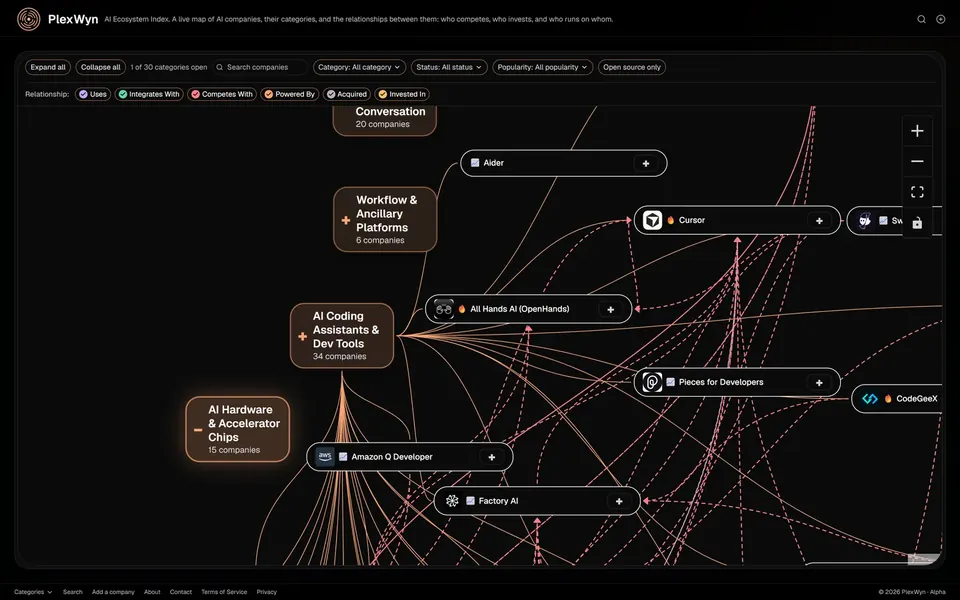
What stays in your hands
We decide the handoffs before the first run, then make them visible in the product.
Unknown is allowed
An item can be held for review when the evidence does not fit the taxonomy. A forced label can be worse than an empty one.
Labels stay editable
Taxonomies change as a business changes. We keep category definitions and model behavior adjustable.
Measure the useful errors
We track misroutes and correction time, not only a single accuracy score from a convenient sample.
What keeps landing in the wrong bucket?
Show us the collection and the labels people use today. We will suggest a short label set that changes the next decision.
Your message goes to the team for review.